%20(1).png)
%20(2).png)
.svg)
.svg)

%20(4).png)

.svg)

.webp)
.webp)
.webp)
.webp)
.webp)
.webp)


Visual Identity Refresh: Why Your Brand Needs One
A practical guide on recognizing the signs your brand needs a design refresh—and how to do it right.
November 11, 2025
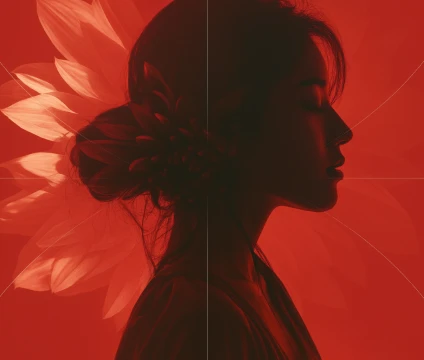
In the last few years, the way creative teams collaborate has changed forever.The studio space is no longer a single physical location — it’s a living network of shared tools, digital whiteboards, and cultural exchanges happening in real time.Atelier Studio believes that the most impactful work happens not in isolation, but at the intersection of perspectives — where design, strategy, and technology meet.
Traditional studios once relied on physical proximity — shared desks, whiteboards, and ambient conversation. But the hybrid era redefines “space” as something fluid and inclusive. Today, creative collaboration exists across digital, physical, and cultural dimensions.
The digital layer connects teams through design tools, shared documents, and real-time prototypes that make creativity visible from anywhere. The physical layer still holds importance, anchoring creativity in tangible experiences — studio sessions, brand workshops, and hands-on material exploration. Meanwhile, the cultural layer gives depth to it all, shaped by ongoing dialogue, feedback, and collective intuition that transcends tools or location.
When these layers align, they create what we call distributed harmony — a state where creative energy circulates freely across time zones and disciplines. It’s not about where collaboration happens, but how seamlessly these dimensions merge to form a continuous ecosystem of shared imagination.
The hybrid model allows studios to expand their imagination and scale their creative potential. It opens doors to talent, culture, and insight from every corner of the world — transforming collaboration into a global exchange of ideas rather than a localized effort.
A designer in Amsterdam might bring European typographic discipline, while a strategist in Kyoto contributes cultural subtlety and visual restraint. When these perspectives converge, the outcome becomes multidimensional — more human, more global, and deeply intentional. Each project gains layers of meaning that can only emerge when creativity meets diversity.
But perhaps the most powerful aspect of hybrid collaboration is autonomy. Every team member learns to design their own rhythm — finding balance between focus and flexibility, discipline and freedom. This independence nurtures a creative confidence that thrives beyond structure.
In this environment, studios evolve from static spaces into living ecosystems — adaptive, responsive, and self-sustaining. The hybrid model doesn’t just make collaboration possible across distance; it makes it richer, more resilient, and infinitely more human.
Technology doesn’t replace collaboration — it amplifies it. In today’s hybrid era, digital tools have become the connective tissue that keeps creative rhythm alive. They don’t simply organize work; they expand how we think, share, and build together.
Atelier Studio relies on a set of core platforms that shape this creative ecosystem. Figma enables collective ideation and real-time prototyping, transforming abstract ideas into shared visual experiences. Notion brings structure — a place where thoughts evolve into documented clarity, guiding projects from brief to execution. Miro provides a virtual space for spatial brainstorming, where concepts flow freely and collaboration feels tactile despite distance. And Slack keeps the pulse of conversation constant, allowing creative dialogue to unfold naturally throughout the day.
These tools are not just systems of productivity; they are extensions of culture. Atelier Studio treats them not as workflows, but as ecosystems — environments where visibility creates empowerment. When every team member can witness the process unfold, creativity becomes transparent, and transparency breeds trust.
The goal isn’t to digitize the studio, but to preserve its heartbeat — one shared board, one comment, one idea at a time. In this sense, technology doesn’t fragment creativity; it holds it together, ensuring that collaboration remains vivid, human, and alive.



.png)



.svg)